1. TYPES OF STEP DRILL BITS
Straight Flute Step Drill Bits
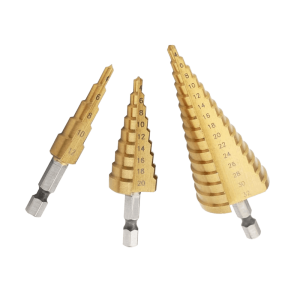
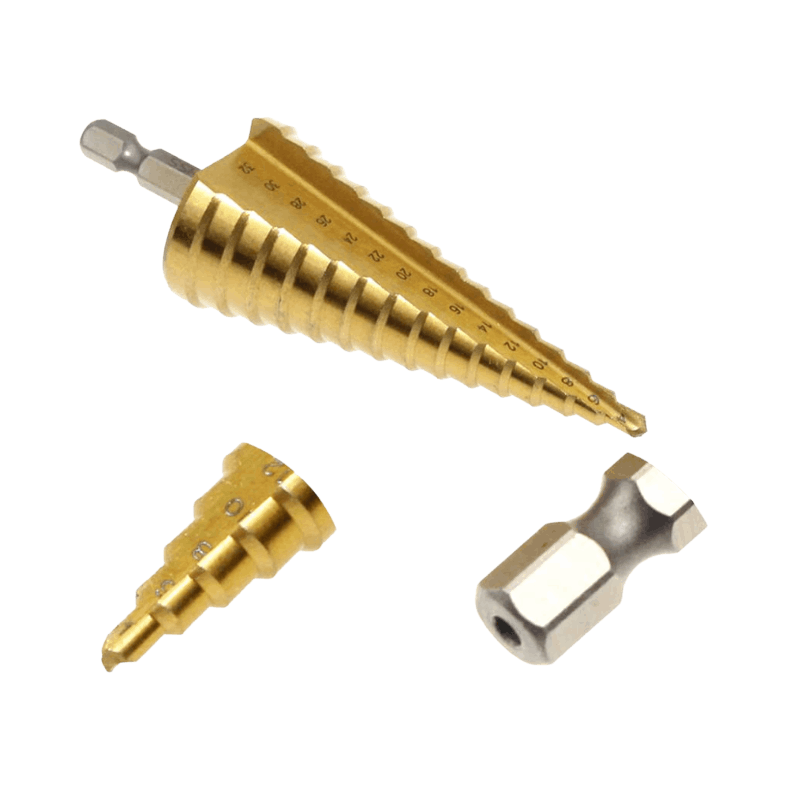
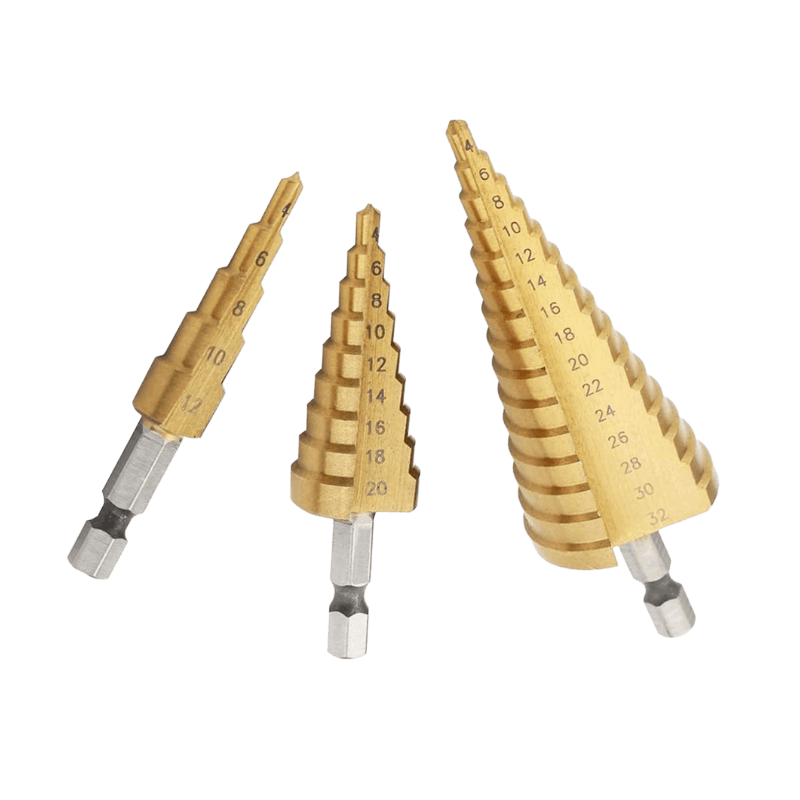
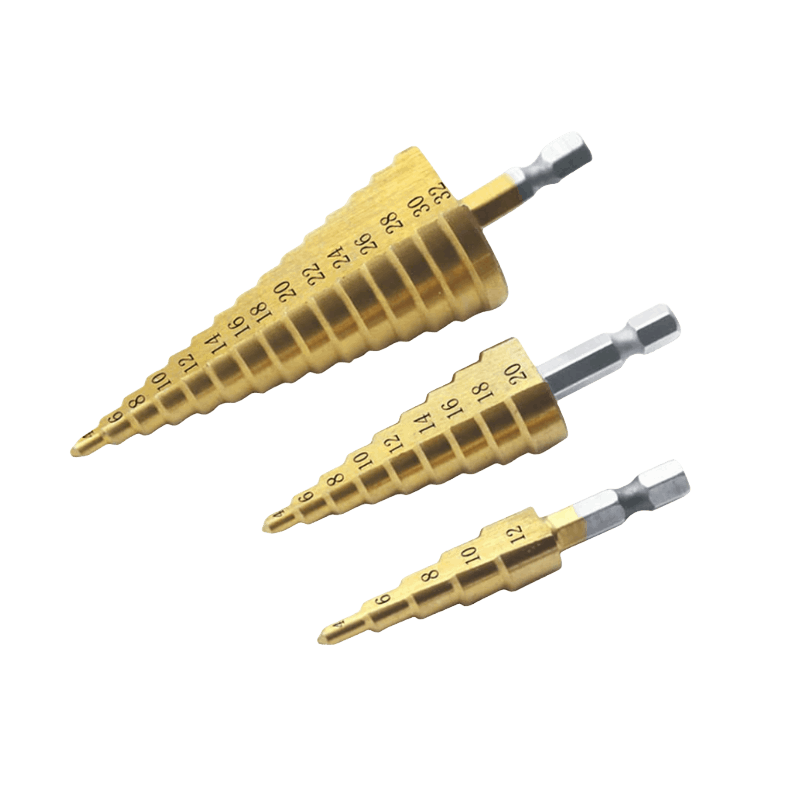
Straight flute step drill bits provide stable cutting performance and controlled hole enlargement. They are suitable for drilling and deburring thin sheet metal, aluminum, copper, plastic, and other thin materials.
Spiral Flute Step Drill Bits
Spiral flute step drill bits improve chip evacuation and help reduce cutting resistance during drilling. Their flute geometry supports smoother cutting and efficient hole enlargement in metal fabrication applications.
HSS Step Drill Bits
High-speed steel step drill bits offer a practical balance of hardness, toughness, wear resistance, and cutting performance. They are widely used for general-purpose drilling, enlarging, and deburring operations.
Coated Step Drill Bits
Coated step drill bits feature a treated surface designed to reduce friction and heat buildup. The coating can improve wear resistance and support a longer service life under suitable drilling conditions.
Metric Step Drill Bits
Metric step drill bits are manufactured with metric hole diameters and step increments. They are suitable for industrial production, equipment installation, maintenance, and applications requiring metric hole sizes.
Inch Step Drill Bits
Inch step drill bits are designed for applications that use imperial hole dimensions. They are commonly supplied for markets and projects requiring inch-based drilling specifications.
Custom Step Drill Bits
Kaining Tools can provide custom and non-standard step drill bits according to customer requirements, including special hole ranges, step increments, shank designs, surface finishes, and packaging.
2. APPLICATIONS OF STEP DRILL BITS
Sheet Metal Fabrication
Step drill bits are widely used to drill and enlarge holes in sheet metal components, enclosures, panels, brackets, and other fabricated metal parts.
Electrical Installation
They are suitable for creating clean holes in electrical cabinets, control panels, junction boxes, cable trays, and metal enclosures during installation work.
HVAC and Ductwork
Step drill bits can be used for drilling holes in ventilation ducts, thin metal panels, HVAC housings, and related installation components.
Automotive Repair
These drill bits are commonly used for drilling and enlarging holes in automotive body panels, brackets, accessories, and thin metal components.
Equipment Manufacturing
Step drill bits support efficient hole processing in machinery parts, equipment housings, control cabinets, and industrial assembly applications.
Maintenance and Repair
Their multi-diameter design makes them convenient for maintenance, repair, installation, and on-site drilling work where several hole sizes may be required.
3. MATERIALS AND FINISHES OF STEP DRILL BITS
MATERIALS AND FINISHES OF STEP DRILL BITS
High-Speed Steel
High-speed steel is commonly used for step drill bit manufacturing because it provides good hardness, toughness, heat resistance, and wear resistance for general metalworking applications.
Heat-Treated Cutting Structure
Controlled heat treatment helps improve the hardness, strength, and durability of the cutting edges. Proper heat treatment also supports stable drilling performance and longer tool life.
Surface Finish Options
Different surface treatments and finishes can be selected according to the drilling material, operating conditions, and customer requirements.
Reduced Friction and Heat
A properly finished cutting surface helps reduce friction and heat buildup during drilling, supporting smoother cutting and more consistent hole quality.
Precision Step Geometry
Accurately ground step diameters help users produce different hole sizes with one drill bit. Clear step transitions also improve drilling control and dimensional consistency.
Custom Material and Finish Options
Material grades, surface finishes, hole ranges, step increments, and other specifications can be customized according to confirmed application requirements.
4. HOW TO CHOOSE STEP DRILL BITS
Hole Size Range
Select a step drill bit that covers the minimum and maximum hole diameters required for the application.
Step Increment
Check the diameter of each step to ensure the drill bit can produce the required hole sizes accurately and efficiently.
Workpiece Material
Choose the drill bit material and surface finish according to the workpiece, such as sheet metal, stainless steel, aluminum, copper, or plastic.
Flute Design
Straight flute designs provide stable cutting, while spiral flute designs can improve chip evacuation and reduce cutting resistance.
Shank Compatibility
Confirm that the shank size and design are compatible with the drill chuck, hand drill, drill press, or other drilling equipment.
Custom Requirements
For special hole ranges, step increments, shank structures, finishes, branding, or packaging, custom step drill bits can be manufactured according to customer drawings or specifications.
5. PROCESS OF STEP DRILL BITS
1. Material Selection
The manufacturing process begins with the selection of suitable high-speed steel or other approved materials. Material quality is carefully controlled to support hardness, toughness, wear resistance, and cutting performance.
2. Blank Preparation
The selected material is cut and prepared according to the required drill bit dimensions. Accurate blank preparation creates a stable foundation for later machining and grinding.
3. Precision Step Grinding
Each step diameter is precisely formed using professional grinding equipment. Accurate step geometry helps ensure consistent hole sizes and smooth diameter transitions.
4. Flute Grinding
The flute structure is ground to create effective cutting edges and chip evacuation channels. Proper flute geometry helps reduce cutting resistance and improve drilling efficiency.
5. Heat Treatment
Controlled heat treatment improves the hardness, strength, wear resistance, and durability of the Step Drill Bits. Stable heat treatment is essential for reliable cutting performance.
6. Surface Treatment
The drill bits receive the required surface treatment or finishing process. This can help reduce friction, improve wear resistance, and enhance appearance and corrosion protection.
7. Quality Inspection
Each Step Drill Bit is inspected for step diameter, overall dimensions, cutting geometry, surface quality, shank compatibility, and drilling performance before shipment.
8. Packaging and Delivery
After inspection, the finished products are packaged according to customer requirements. OEM branding, customized packaging, and bulk order solutions can be provided.
The cutting performance, durability, and service life of Step Drill Bits depend on the materials, heat treatment, flute geometry, and surface finish used during manufacturing. Proper material selection helps provide stable drilling, efficient hole enlargement, and reliable wear resistance.
High-Speed Steel (HSS)
High-Speed Steel is commonly used for manufacturing Step Drill Bits because it offers a practical balance of hardness, toughness, heat resistance, and wear resistance.
HSS Step Drill Bits are suitable for drilling, enlarging, and deburring holes in sheet metal, aluminum, copper, plastic, and other thin materials.
Heat-Treated HSS
Controlled heat treatment improves the hardness, strength, and durability of HSS Step Drill Bits. A stable heat-treatment process helps the cutting edges maintain reliable performance during repeated drilling operations.
Coated Step Drill Bits
Coated Step Drill Bits feature a treated surface designed to reduce friction, heat buildup, and cutting resistance. The coating can improve wear resistance and extend tool life under suitable operating conditions.
Precision-Ground Step Geometry
Each step diameter is precisely ground to ensure accurate hole sizing and smooth transitions between cutting steps. Precision grinding also helps improve drilling stability and hole quality.
Custom Materials and Finishes
Kaining Tools can manufacture customized Step Drill Bits according to customer requirements, including material grades, surface finishes, flute designs, step diameters, shank structures, logos, and packaging.
APPLICATIONS OF STEP DRILL BITS
Sheet Metal Fabrication
Step Drill Bits are widely used for drilling and enlarging holes in sheet metal panels, brackets, enclosures, cabinets, and fabricated metal components.
Electrical Installation
They are suitable for creating holes in electrical cabinets, junction boxes, control panels, cable trays, and other thin metal enclosures.
HVAC and Ductwork
Step Drill Bits are commonly used for drilling ventilation ducts, HVAC housings, galvanized sheet panels, and installation components.
Automotive Repair
They provide an efficient solution for drilling and enlarging holes in automotive body panels, brackets, accessories, and thin metal parts.
Equipment Manufacturing
Step Drill Bits are used in machinery assembly, equipment production, control cabinet manufacturing, and other industrial applications requiring multiple hole sizes.
Maintenance and Custom Applications
Their multi-diameter design makes them convenient for maintenance, repair, installation, and customized drilling work. Special hole ranges, step increments, shank types, and finishes can be produced according to customer requirements.
PROCESS OF STEP DRILL BITS
1. Material Selection
The manufacturing process of Step Drill Bits begins with the selection of high-quality high-speed steel materials. Raw materials are carefully selected to provide excellent hardness, toughness, wear resistance, and heat resistance, ensuring stable cutting performance and long service life during metal drilling applications.
2. Blank Preparation
The selected material is cut and formed into drill bit blanks according to the required dimensions. Accurate blank preparation provides a stable foundation for subsequent machining.
3. Precision Step Grinding
Each step diameter is precisely ground using professional equipment. Accurate step geometry helps produce consistent hole sizes and smooth diameter transitions.
4. Flute Grinding
The flute and cutting edges are ground to improve chip evacuation, reduce cutting resistance, and support efficient drilling and hole enlargement.
5. Heat Treatment
Controlled heat treatment improves the hardness, strength, wear resistance, and durability of the Step Drill Bits, helping maintain stable performance during repeated use.
6. Surface Treatment
The drill bits receive the required surface finish or coating according to customer specifications. Surface treatment can help reduce friction, improve wear resistance, and enhance corrosion protection.
7. Quality Inspection
Each Step Drill Bit is inspected for step diameter, cutting geometry, shank dimensions, surface quality, and drilling performance. Finished products are checked to meet customer requirements and production standards.
8. Packaging & Delivery
After inspection, the Step Drill Bits are packaged according to customer requirements. OEM branding, custom labels, retail packaging, bulk packaging, and export delivery solutions are available.